

Waterproofing SystemsKeep water out.
Engineered waterproofing solutions for roofs, basements, foundations, water tanks, wet areas, podium decks and below-grade concrete structures.
Long-term protection begins with the water path.
Waterproofing is designed to stop water and moisture from reaching structural elements, finishes and occupied spaces.
A successful specification starts with the source of water, pressure, substrate condition, movement and expected service life—not simply the choice of a coating or membrane.
Beta Misr evaluates the project conditions first, then selects the membrane, detailing and installation method required for dependable long-term protection.
Built around the demands of the environment.
Each waterproofing build-up is selected to balance protection, durability, maintenance and lifecycle value.
Leak prevention
Controls rainwater, groundwater and persistent moisture exposure.
Concrete protection
Helps reduce reinforcement corrosion and water-driven deterioration.
Longer service life
Protects structural elements and supports a longer building lifecycle.
Lower maintenance
Reduces recurring repair caused by leaks, dampness and damaged finishes.
Healthier interiors
Limits moisture conditions associated with mold and finish failure.
New + existing assets
Suitable for new construction, rehabilitation and targeted leak repair.
The right system for the right condition.
Structure type, water pressure, movement, exposure and service-life requirements determine the most suitable waterproofing build-up.
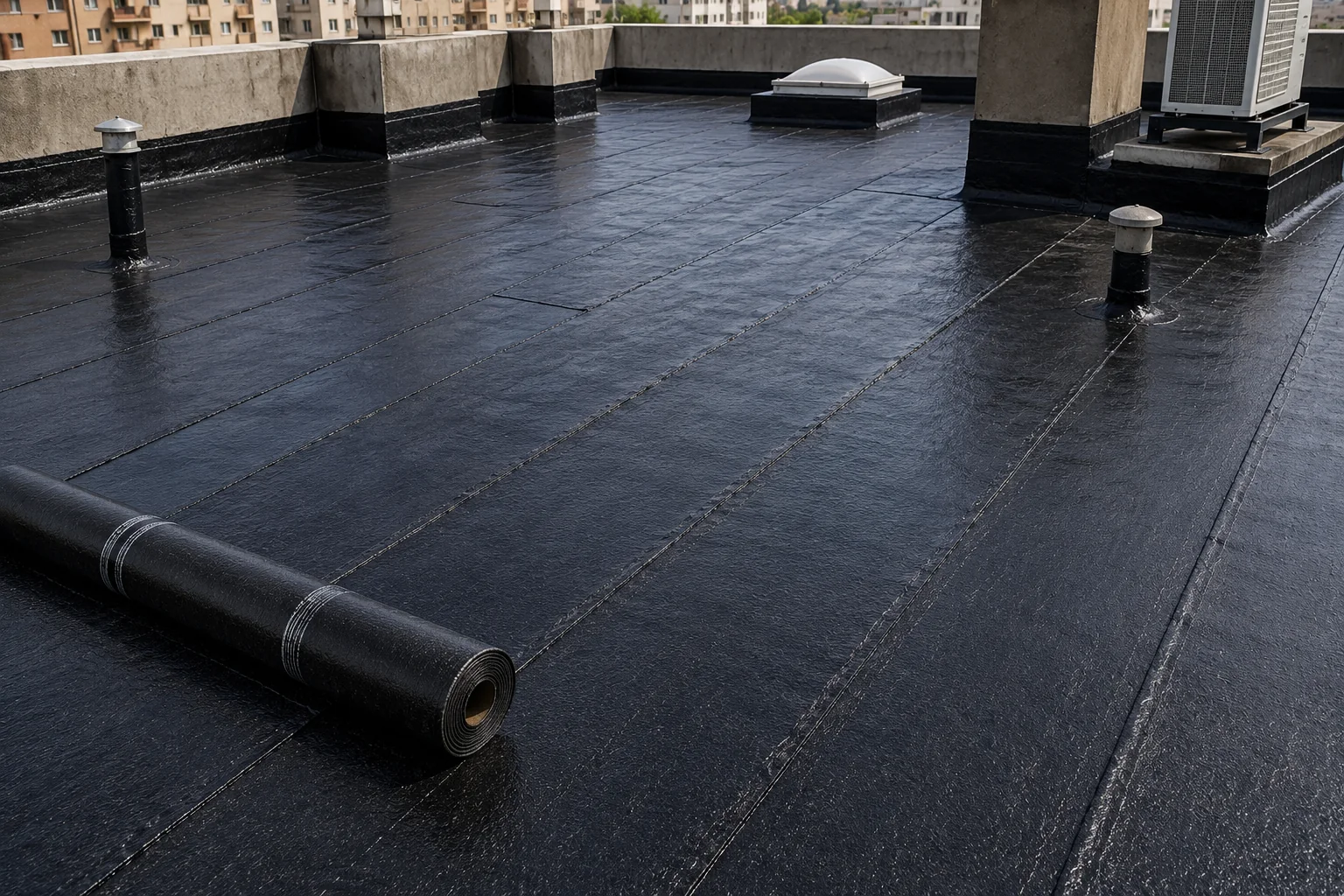
Bituminous Membranes
Robust sheet-membrane waterproofing for roofs and below-grade structural elements where continuous protection is required.
Key advantages
- Continuous barrier
- Suitable below grade
- Durable coverage
Typical uses
- Roofs
- Basements + foundations
- Podium decks + retaining walls
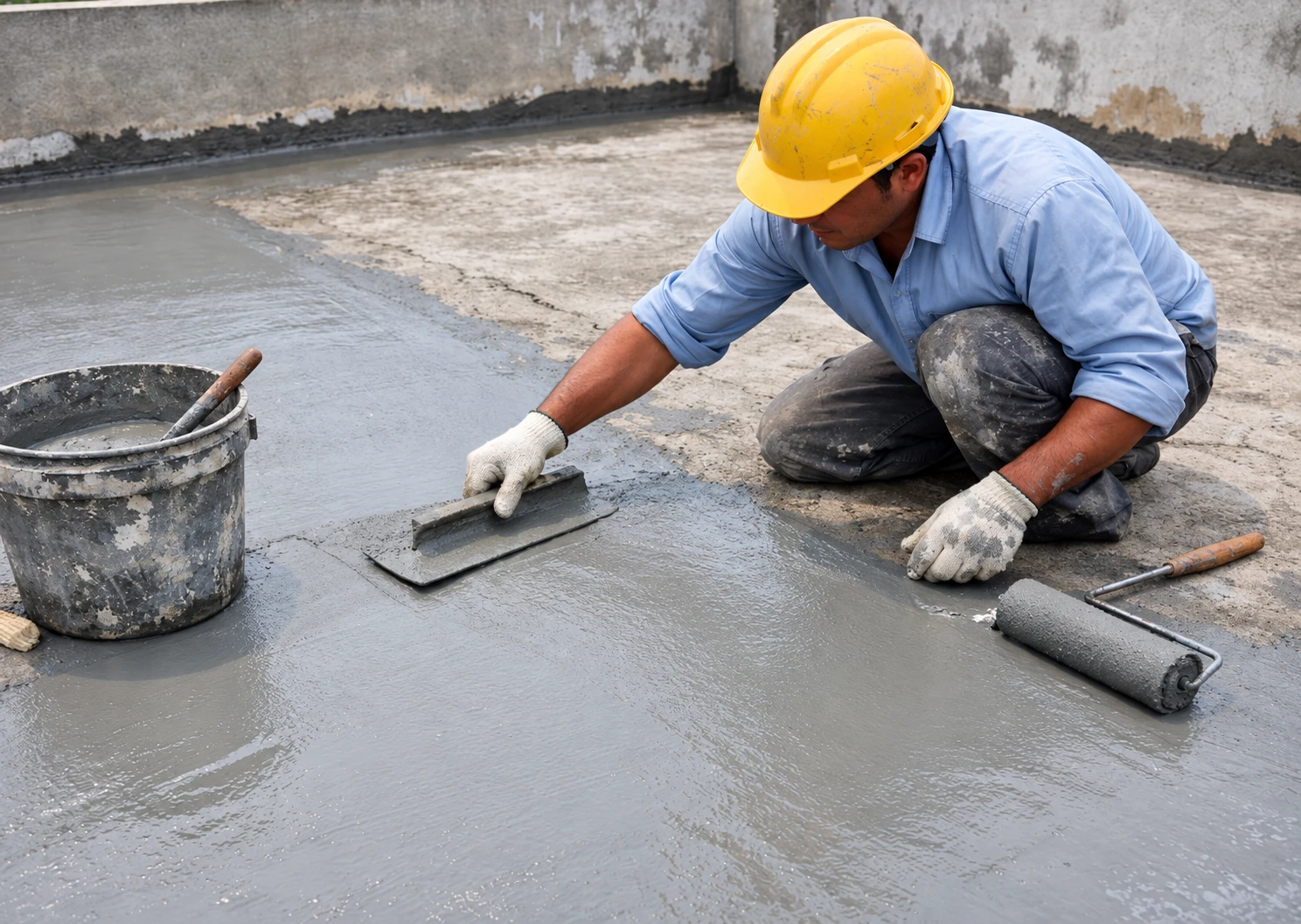
Cementitious Waterproofing
Cement-based protection designed to bond with concrete and support applications exposed to positive or negative water pressure.
Key advantages
- Concrete compatibility
- Positive-pressure protection
- Negative-pressure protection
Typical uses
- Water tanks
- Bathrooms + wet areas
- Pools + basements
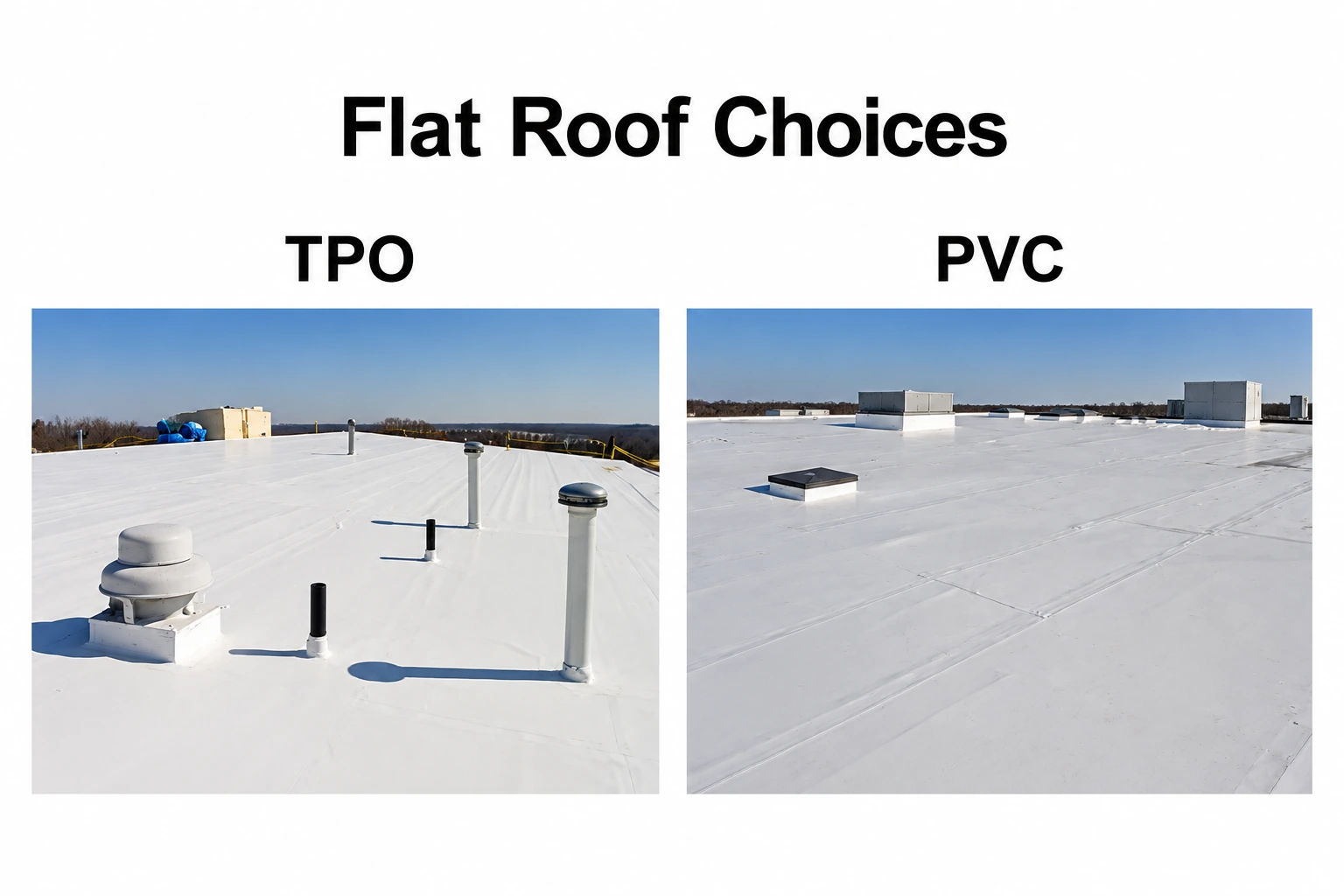
PVC & TPO Membranes
Heat-welded synthetic membrane systems for broad roof areas where controlled seams, speed of installation and large-area coverage matter.
Key advantages
- Heat-welded seams
- Large-area coverage
- Reliable roof protection
Typical uses
- Industrial roofs
- Commercial roofs
- Large roof areas
Where waterproofing performs best.
The final system should match the actual exposure, substrate, movement and operating conditions of each area.
Roofs
Basements
Foundations
Podium decks
Retaining walls
Underground structures
Water tanks
Bathrooms
Pools
Industrial roofs
Commercial roofs
Large roof areas
Controlled from survey through handover.
Preparation, detailing and inspection are as important as the waterproofing material itself.
Site assessment
Review structure, exposure, leakage, substrate condition and project requirements.
Surface preparation
Remove dust, loose particles, oils, coatings and contaminants that can affect bonding.
Concrete repair
Treat cracks, honeycombs, joints and damaged concrete before the waterproofing system is installed.
Primer application
Apply the required primer where the selected membrane or coating system requires it.
System installation
Install the specified waterproofing continuously with correct overlaps, seams and detailing.
Inspection + testing
Verify coverage, membrane integrity, adhesion, seams and water tightness before handover.
Performance, made visible.
Professional waterproofing depends on continuous coverage, careful detailing and controlled installation.

Useful answers before you specify.
Every structure has different exposure, water pressure and substrate conditions, so system selection should follow assessment.
What is waterproofing?
It is a protective system intended to stop water and moisture from penetrating buildings and concrete elements.
Which waterproofing system is best?
The appropriate system depends on structure type, exposure, water pressure, substrate condition, movement and service-life requirements.
Can an existing building be waterproofed?
Yes. Existing structures can be rehabilitated after the water path, defects and damaged areas have been identified and repaired.
What affects waterproofing cost?
System type, surface condition, access, repair needs, project area, pressure and environmental exposure all influence the final cost.
Let’s engineer the right waterproofing solution.
Share the project type, area, existing condition and performance requirements. Our team can review the conditions and recommend the most suitable system.
